
King’s College London,
London, UK
About King’s College London
King's College London is one of the world's leading research-intensive universities, founded in 1829 and consistently ranked among the UK's top universities. With more than 40,000 students from over 150 countries, King's is internationally recognised for excellence in education, research and innovation across the sciences, health, humanities and social sciences.

The university is home to internationally recognised research in neuroscience, developmental biology and genetics, with world-leading centres including the Centre for Developmental Neurobiology, the Maurice Wohl Clinical Neuroscience Institute and the Institute of Psychiatry, Psychology & Neuroscience (IoPPN). King's researchers are advancing our understanding of how the brain develops, functions and changes throughout life, translating fundamental discoveries into new approaches for neurological and psychiatric disorders.
King's is also part of one of Europe's leading zebrafish research communities. Together with neighbouring institutions including University College London (UCL) and Imperial College London, researchers collaborate through the London Zebrafish Consortium, creating one of the largest concentrations of zebrafish expertise in Europe. This collaborative network uses zebrafish to investigate embryonic development, genetics, neuroscience, regeneration and human disease, sharing expertise, technologies and training to accelerate scientific discovery.
Through BioEYES London, King's College London brings this world-class research directly into schools, giving students the opportunity to experience authentic scientific discovery through hands-on investigation of live zebrafish embryos. By connecting cutting-edge developmental neuroscience with classroom learning, the programme aims to inspire curiosity, build scientific confidence and encourage the next generation of researchers, clinicians and innovators.
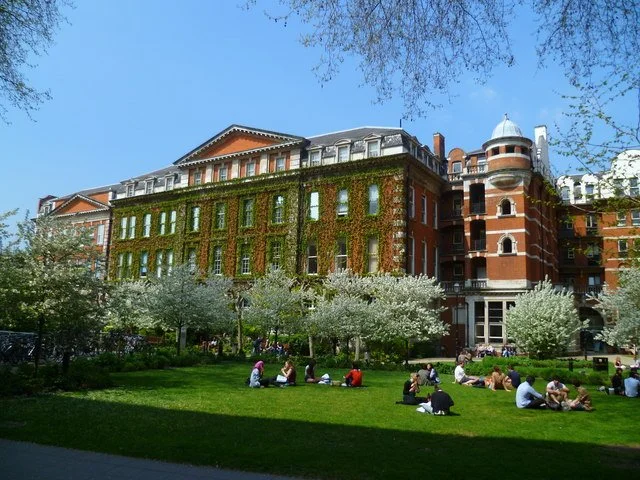
The Hodgkin Building, home to KCL’s fish facility.
King’s College London BioEYES
BioEYES at King's College London introduces secondary school students to the fascinating world of developmental neuroscience through an immersive, hands-on programme centred around live zebrafish embryos. Developed by researchers at King's College London, the programme combines authentic scientific investigation with curriculum-linked learning, giving students the opportunity to experience how modern biomedical research is carried out while exploring one of biology's most fundamental questions: How does a single cell become a complex organism?
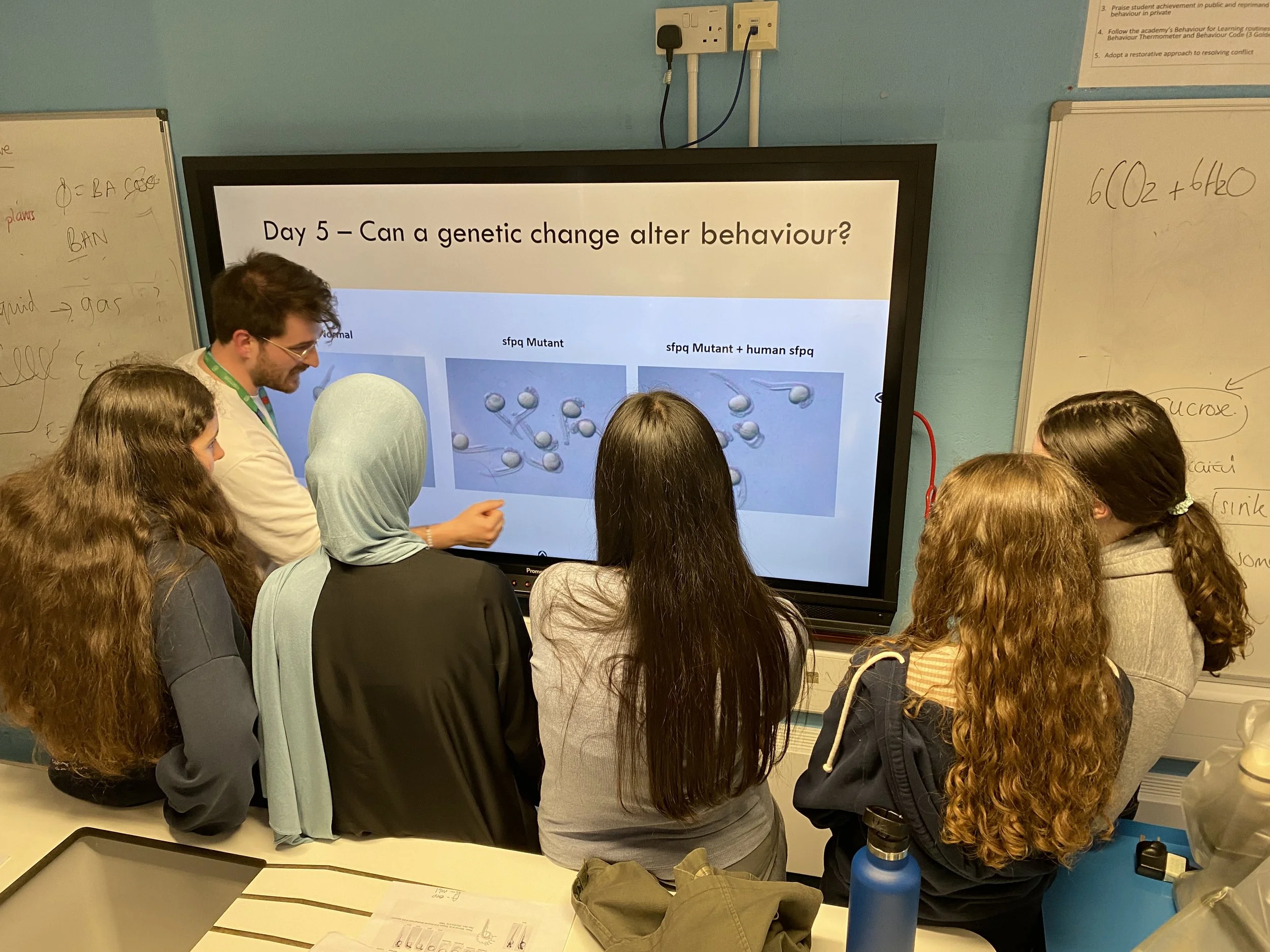
Dr Matthew Bostock presenting to a group of BioEYES students.
Across a series of interactive sessions, students work alongside scientists using laboratory microscopes, fluorescence imaging and live zebrafish embryos to observe development as it happens. They learn to identify key stages of embryogenesis, explore the organisation of the developing nervous system, and discover how cells, tissues and organs emerge through carefully coordinated genetic programmes. By directly observing living embryos and comparing them with genetically altered models, students gain a deeper appreciation of how genes influence brain development, behaviour and human health.
The programme goes beyond teaching biological concepts as students are introduced to many of the same techniques used in cutting-edge neuroscience laboratories, including fluorescence microscopy, cellular imaging and genetic analysis. They investigate how researchers visualise individual neurons, examine the consequences of genetic mutations on development and behaviour, and discover how technologies such as CRISPR gene editing are transforming modern biomedical research. These experiences provide a unique insight into contemporary neuroscience and demonstrate how fundamental research underpins advances in medicine.
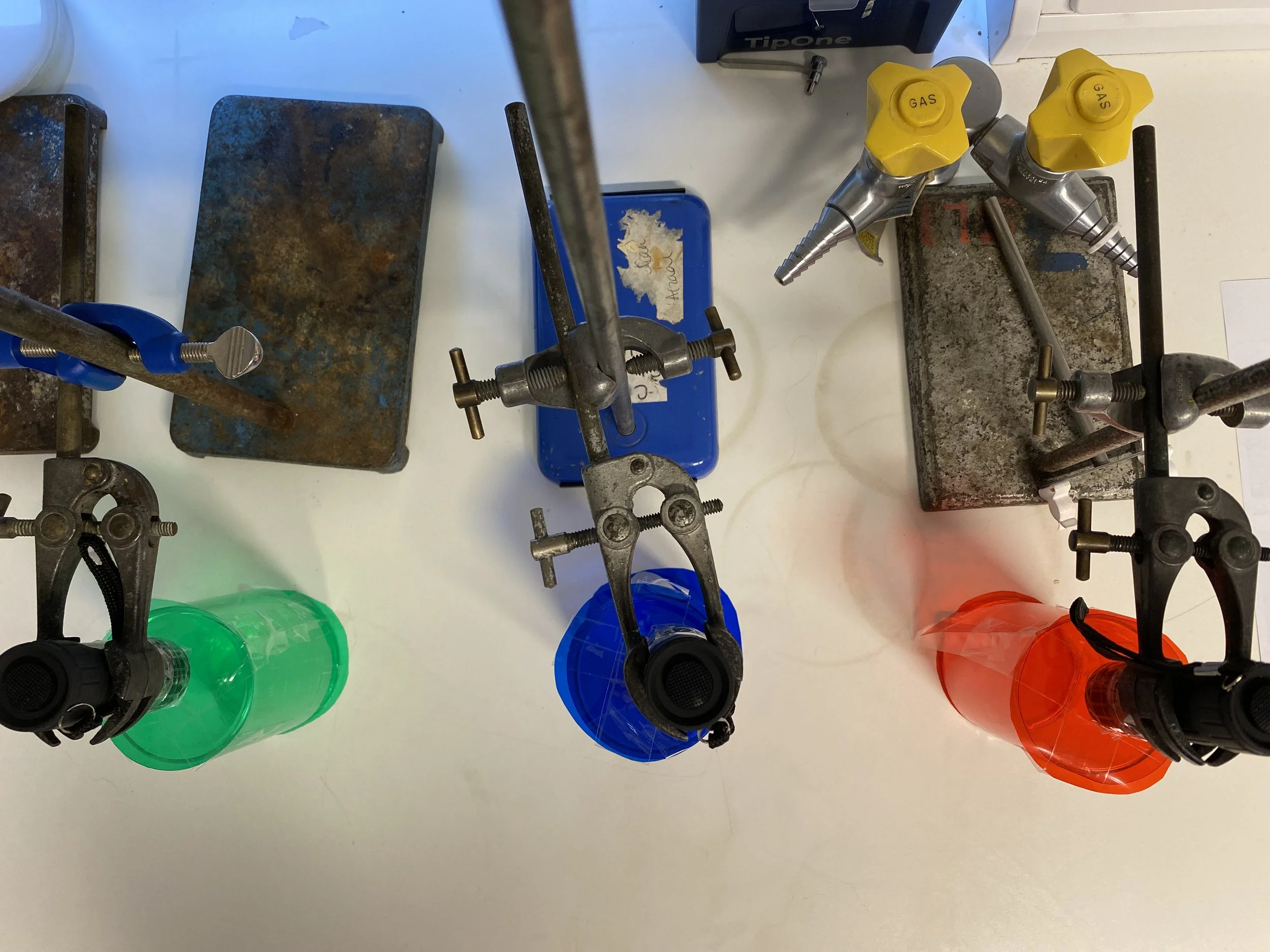
Students design their own experiments, such as this one testing the effects of different wavelengths of light on the development of zebrafish embryos.
King's College London is internationally recognised for excellence in neuroscience, genetics and developmental biology. Through BioEYES, students engage directly with this research environment, meeting scientists, exploring real laboratory techniques and gaining first-hand experience of discovery-led science. The programme aims to inspire curiosity, build scientific confidence and broaden participation in STEM by demonstrating that science is creative, collaborative and accessible.
By connecting classroom learning with real-world biomedical research, BioEYES at King's College London empowers young people to see themselves as scientists, encouraging the next generation of researchers, clinicians and innovators.
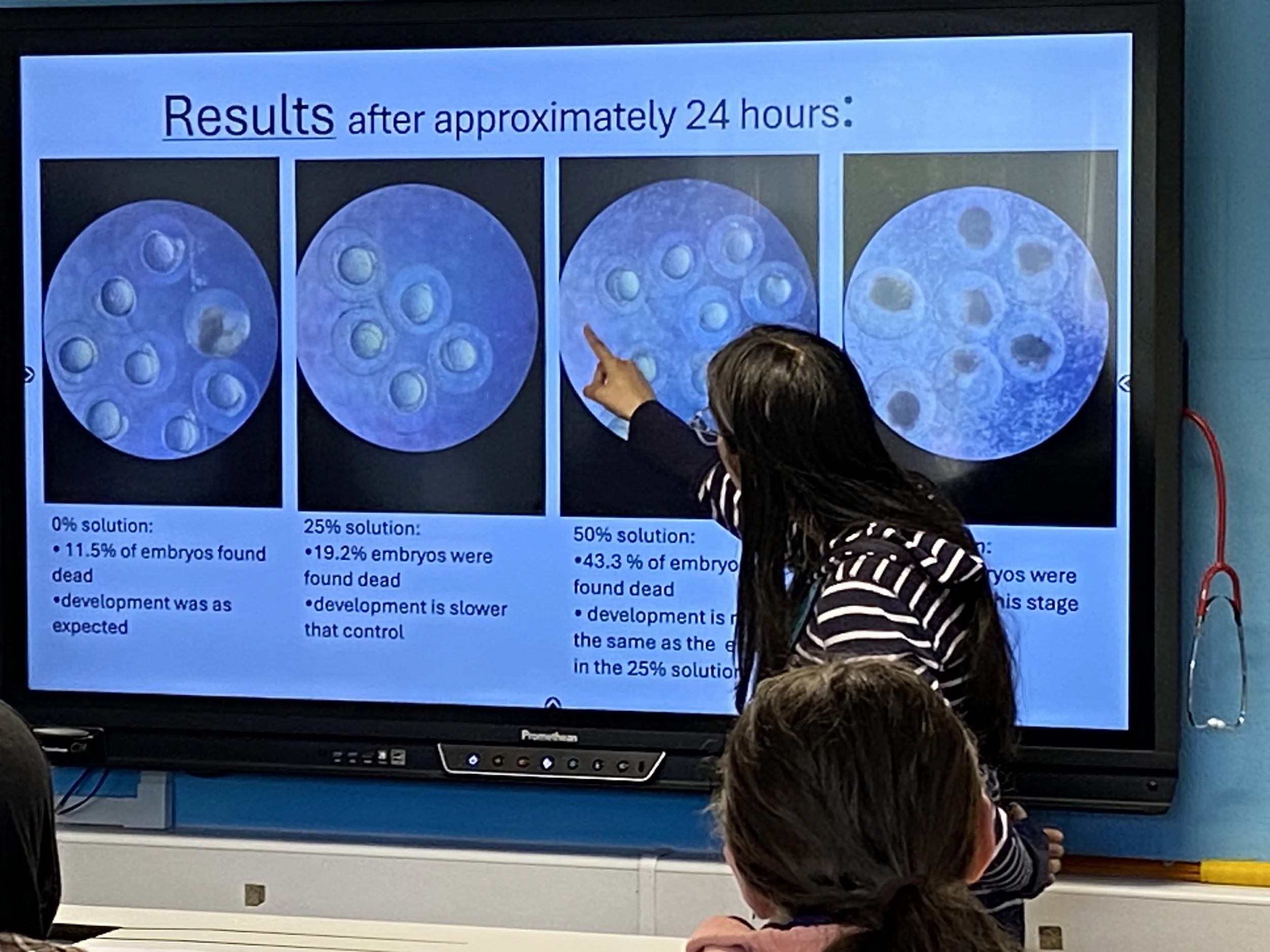
The programme ends with the students presenting their findings.
A defining feature of King's College London's BioEYES programme is its emphasis on scientific thinking. Throughout the course, students are encouraged to make observations, formulate hypotheses, analyse evidence and communicate their findings. The programme culminates in student-designed research projects, where participants develop their own scientific questions, design experiments using zebrafish embryos, analyse their data and present their conclusions. In doing so, they experience the complete research process, from curiosity and experimental design to data interpretation and scientific presentation, mirroring the work of professional researchers.
Importantly, the programme is closely aligned with the UK science curriculum, reinforcing key topics including cell biology, genetics, embryonic development, microscopy, the nervous system and scientific enquiry. At the same time, it provides meaningful enrichment by exposing students to emerging fields such as developmental neuroscience, genomics, single-cell biology and translational medicine. This combination of curriculum support and authentic research experience helps students understand not only what scientists know, but how scientific knowledge is generated.
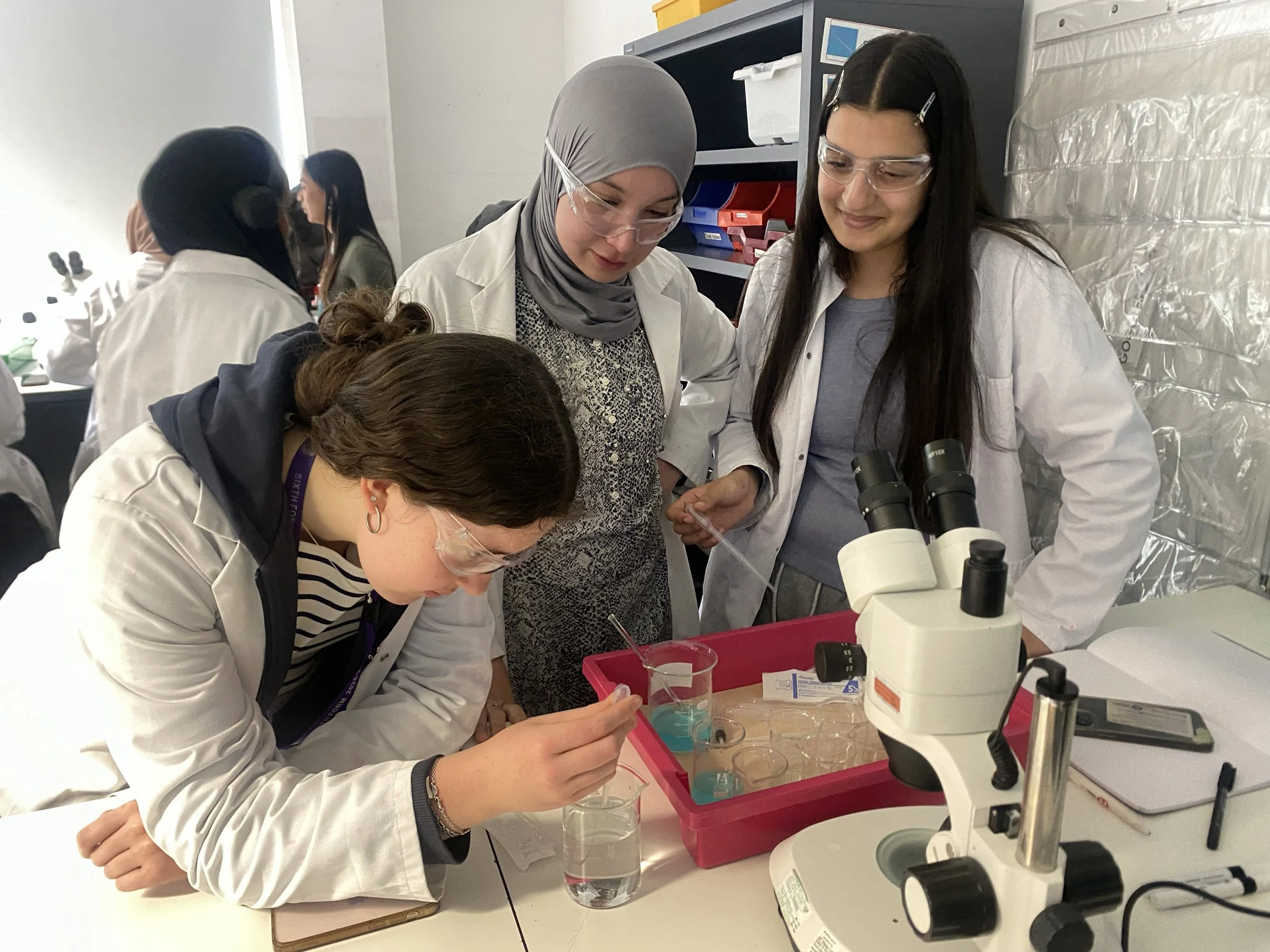
Students learn real laboratory techniques as part of King’s College London’s BioEYES programme.
Contact BioEYES London
Dr Leigh Wilson
Public Engagement Manager & Teaching Fellow
BioEYES Program Lead & Outreach Educator
Centre for Developmental Neurobiology
King’s College London, Guy’s Campus
London SE1 1UL
Leigh.wilson@kcl.ac.uk
Meet the staff of BioEYES London
-

Dr Leigh Wilson
Public Engagement Manager & Teaching Fellow
BioEYES Program Lead & Outreach Educator
Centre for Developmental Neurobiology,
King’s College London, Guy’s Campus
London SE1 1UL
Leigh.wilson@kcl.ac.ukI am passionate about helping young people discover the excitement of scientific research. As Public Engagement Lead and Teaching Fellow at King's College London, I design innovative education programmes that connect students with world-leading neuroscience research through hands-on investigation and creative learning.
At King’s College London, I am the Director of the Developmental Neuro Academy widening participation programme and I co-lead BioEYES London, where students explore how zebrafish help scientists understand brain development, genetics and human disease. Working alongside researchers from King's, I am committed to making cutting-edge science accessible to everyone and inspiring students from all backgrounds to see themselves as future scientists.
My work combines developmental neuroscience, education and public engagement, with a particular interest in creating inclusive research experiences that build confidence, curiosity and a lifelong enthusiasm for science.
-
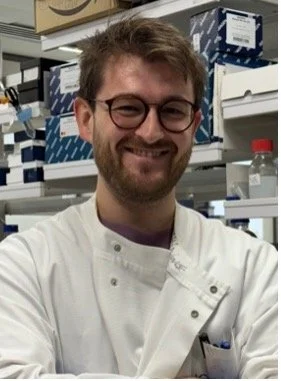
Dr Matthew Bostock
Postdoctoral Research Associate
BioEYES Program Lead
Centre for Developmental Neurobiology,
King’s College London, Guy’s Campus
London SE1 1UL
Matthew.bostock@kcl.ac.ukI am fascinated by how the developing brain is assembled and how the same molecular logic goes wrong in neurodegenerative disease. As a Postdoctoral Research Associate in the Houart Lab at King's College London's Centre for Developmental Neurobiology, I study the RNA-processing decisions that shape neurons, and how those decisions become dysregulated in conditions like motor neuron disease.
My research has defined a new class of regulated RNA events called Cryptic Last Exons, a tuning mechanism conserved across zebrafish, mouse and human that helps neurons fine-tune gene activity during development. Using zebrafish as a primary model alongside human tissue data and computational analysis, I trace these events from healthy brain development through to their reactivation in disease, work that forms the basis of my first-author manuscript currently in revision at Molecular Cell.
My work sits at the intersection of developmental neurobiology, RNA biology and computational genomics, with a particular interest in understanding regulatory mechanisms deeply enough to turn them into biomarkers and therapeutic opportunities. I am driven by the conviction that the rules governing how a brain is built are the same rules we need to understand to treat the diseases that take it apart.
BioEYES represents an opportunity to bring my passion for outreach and developmental genetics together to make a meaningful difference with the next generation of young biologists.
-

Professor Corinne Houart
Developmental Neuroscientist and Vice Dean Research
BioEYES Scientific Advisor
Centre for Developmental Neurobiology,
King’s College London, Guy’s Campus
London SE1 1UL
corinne.houart@kcl.ac.ukMy team aims to understand the mechanisms of fate specification shaping forebrain regionalisation and is currently identifying the evolutionary aspects of these early decisions. We aim to understand the signalling integration controlling telencephalic complexity across species, using animals and 3D cell culture. My group also developed more recently a second research direction, using original approaches to understand axonal mRNA regulation driving neuronal maturation. Both research directions led to findings opening therapeutic avenues for neurodevelopmental and neurodegenerative disorders.
I have dedicated part of my time to teaching undergraduate students and mentoring early career researchers. We devote energy to the promotion of scientific approaches to, and sharing scientific findings with, high school pupils and adults, through programmes such as Dev Neuro Academy, Green Man Festival or Pint for Science, and now, BioEYES.
I am on the editorial board of leading developmental biology journals, board member of funding bodies, EMBO member and recipient of the MRC Suffrage Science Award.